
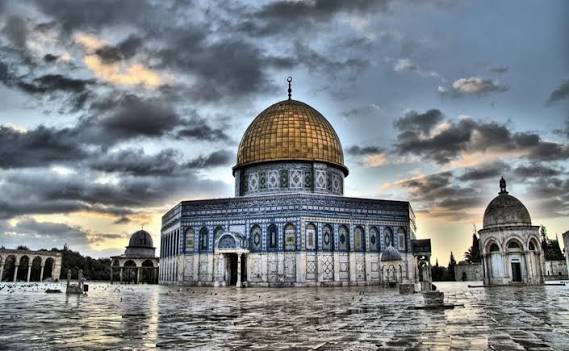
The world around us paints a picture of despair wherever you look. The powerful are calling the shots, Gaza lies in ruins with no tangible response from weak Muslim governments who are enslaved to the west, Aqsa is violated increasingly by Jewish extremists, Hindutva mobs are creating terror in India, Islamophobic attacks are on the rise in the west and the Epstein files showed us how the people in power are manipulated. From the royal houses of Europe to presidents and prime ministers, the world that wants to lecture Muslims on women’s rights is underpinned by the most depraved abuse of vulnerable girls, boys and women. Ineffectual international bodies like the United Nations which were created by the former colonial powers to keep their grip on world power serve no real purpose. It seems like we have no glimmer of hope anywhere. The war with Iran is adding to the chaos and instability across the globe.
Was there a time where the Muslim community was at such a low ebb? Yes, there were many similar situations, maybe not on the full scale as today, where the Muslim world was in tatters. The era of the Crusades saw Masjid Aqsa being captured in 1099. At that time petty Muslim states were bickering among themselves even making alliances with the Crusaders against other Muslim states. Shia political manoeuvring was hampering Muslim progress and shadowy organisations like the Assassins and Templars were trying to influence politics.
After 88 years Salahuddeen Ayyubi liberates Masjid Aqsa and Jerusalem. But his success didn’t come in a vacuum. He was the product of several factors which combined. These very same factors provide the hope for our times, and a plan on how we can forge the way ahead and remove the despair.
The first element was a Sunni revival
One of the foremost personalities instrumental in this was Nizam al Mulk Abu Ali Hassan al Tusi. He was a Persian Sunni scholar and vizier of the Seljuk Empire. He was the effective ruler of the state after Alp Arslan. He was a pious individual who used to fast Mondays and Thursdays. He introduced policies which remained the basic foundation for the administration of the Muslim world until the 20th century. His most important legacy though was founding a system of Madressas across the Seljuk Empire called the Nizamiyyas. These institutes were among the first well-organised institutions of higher learning in the world. The quality was among the highest and they were even renowned in Europe. They were funded by the royal establishment and were an attempt to combat the rise of Shiasm. They produced judges, scholars and officials. Imam Ghazali was a professor of the Nizamiyya Madressa in Baghdad. He authored works like Ihyaa Uloom al Deen to revive Sunni practice as well as an acclaimed work, Fadhaaih al Batiniyyah, exposing the Ismaili Shia who were in power in some parts of the Muslim world at the time.
Nizam al Mulk was assassinated by the Ismaili Shia but his legacy impacted the Muslim world. The graduates of his Madressas in turn educated the warriors and leaders like Nuruddeen Zengi and Salahuddeen Ayyubi.
The scholars
The second element in the success of Salahauddeen was the role of the scholars. Sheikh Abdul Qadir al Jilani was a prominent scholar of the time of Salahauddeen. Ibn Khashab from Aleppo made urgent calls for military resistance against the Crusaders. Najmuddeen al Khabashani was pivotal in Salahuddeen’s consolidation of power in Egypt. Al Qadi al Faadil was his closest advisor. There were many others who raised awareness of the Crusader threat. Among the scholars who conscientized the people and raised awareness of the need to confront the invading Crusaders was Abu Sa’ad al Harawi. Jerusalem had fallen to the Crusaders in July 1099. Some of the survivors of the massacre reached Damascus where al Harawi was a judge. He embarked on a course of activism, undertaking a trip to Baghdad to stir the Abbasid Caliph into doing something. He arrived in Baghdad on the 29th of Ramadaan on a Friday. He went to the main Masjid where people were gathered for Juma prayers and started eating openly in front of everyone. Once he got their attention through this tactic, he told them about the fall of Aqsa. The Caliph Mustazhir promised to do something, but nothing came of it.
The scholars played an important role in correcting people and bringing them closer to Islam, in reforming their character, combating Shiasm and rousing the people to Jihad.
Military resistance
The third element was the build up of military resistance and Jihad. Military leaders like Kerbagha, Jikirmish, Ilghazi, Aqsuqur, al Bursuqi and Mawdood ibn Tuntash started engaging the Crusaders who had come into the heart of the Muslim lands. The Crusaders were in Syria, attacking Iraq, aiming their sights on Egypt and in control of Jerusalem. Mawdood ibn Tuntash defeated them in the Battle of Sannibra in Palestine, forcing them into defensive positions for the first time. Mawdood was assassinated by the Ismaili Shia order of the Assassins in the Umayyad Masjid of Damascus while fasting on Juma. People urged him to break his fast when he was fatally wounded but he refused saying, “I do not want to meet Allah Ta’ala except while fasting.” He died that day. The Seljuk governor of Mosul, al Bursuqi, took on the mantle of resistance. He scored some victories against the Crusaders but also falls to the Shia. He was praying Juma in Mosul, and the Ismaili Shia assassinate him. The night before he had seen a dream where he was being attacked by a pack of wild dogs. People urged him not to go out of his home for a few days, but he said, “I will never leave Juma for anything.”
The Shia agenda
Between the threat of the Crusaders and the weak, bickering Muslim leaders was the deviousness of the Shia who hampered Muslim progress at every turn. They were the fourth element. They assassinated, among others, Muslim leaders like Nizam al Mulk, Mawdood and al Bursuqi. Who were these Shia? They were Ismaili Shia also known as Batiniyyah due to their rejection of many of the outward laws of Islam. They claimed Ismail ibn Jafar al Sadiq as their Imam and were heavily influenced by the philosophy of Plato. They controlled North Africa at the time of the Crusaders and Salahuddeen. They established Azhar University to propagate their beliefs. They banned Taraweeh prayers in some places under their control. In 950 in Burqa, modern day Libya, they announced Eid the following day without having sighted the moon. The judge Muhammad al Hablli refused to endorse this and insisted on the physical sighting of the moon. They hung him in the sun and crucified him until he died. In their reign, they killed many Ulama of Islam.
One of the Ismaili Shia branches was the Order of the Assassins founded in 1090 by Hassan Sabah. They operated out of mountain castles in Persia and Syria, assassinating many Muslim leaders. Salahuddeen twice escaped their assassination attempts. In 1164, their leader Hassan II gathered them at their Alamut fortress in Iran and declared on the 17th of Ramadaan that the hidden Shia Imam had abrogated the external laws of Islam. They began eating during the day, and drinking wine while facing their backs to Makkah Mukarramah. The Druze in Syria who are allied to Israel, and the Alawites who ruled Syria until 2024 are offshoots of the Ismaili Shia. The Nizari Shia who recognise the Aga Khan as their Imam today are also from the same sect, as were the Qarmatians who stole the Black Stone from the Kabah and kept it for many years.
Salahuddeen’s uncle Asaduddeen Shirkuh went to Egypt to infiltrate the Shia state. He was eventually appointed vizier by the Shia leader al Adid li Deenillah but died two months later. Al Adid then looked for the most inexperienced person from Shirkuh’s forces to manipulate but made the biggest blunder of his life by appointing the young Salahuddeen as vizier. Gradually Salahuddeen erased Shia power, overthrew the Shia dynasty and state, made Azhar a Sunni institute of learning and eradicated Shiasm from Egypt totally.
The Crusaders
The Crusaders were the fifth element in the era of Salahuddeen. They were created by Pope Urban II to take Muslim lands. Sicily fell to them and they attacked Muslim Spain. The Crusaders were driven by greed for the riches of the Muslim world and were guilty of a long list of atrocities, massacres, rape and cannibalism:
- In taking Jerusalem, they slaughtered 70,000 civilians.
- In the Siege of Marrat an Numan in Syria they killed the men who surrendered and enslaved the women and children. They proudly ate the meat of the Muslims who were killed and traded their flesh. Cannibalism was not an isolated atrocity but happened at other places such as Antioch where even babies were eaten.
- Even the celebrated King Richard of England had 3,000 Muslim men, women and children prisoners killed in Acre.
- Jews were also not safe from the marauding Crusaders who raped and killed thousands of them in Europe on their way to the Middle East.
Individual skills
Individual efforts also stood out from the collective with people using their skills for Islam:
- The County of Edessa was a Crusader state set up in north Iraq and south Turkey. Imadduddeen Zengi liberated it in 1144. This was a major blow to the Crusaders as it was their first state established in the East. The Muslim scholar and Muazzin Moosa al Armani was a teacher in Mosul. He entered Edessa during the siege dressed in Armenian clothes which would be identified with Christians. He said that he went to gather information. He came upon a mosque and climbed the Minaret. He called out the Athan to see what would happen. On hearing the Athan from that side of the city, the Crusaders thought the city was under attack from that quarter and abandoned the walls they were defending allowing the Muslims to scale them and take the city.
- In the Siege of Acre the Crusaders besieged the city. Salahuddeen defended it for two years using Muslim ships to try and break the siege and supply the city’s defenders. The Crusaders used 5 storey siege towers that were immune to the current formula of Greek fire. A son of a Damascus coppersmith developed a new formula using his knowledge of chemistry and the mixture was used to burn out the siege towers.
The long-term project for success
The legacy of Salahuddeen showed how a 100-year project of schools, education, scholars and Jihad eventually led to him liberating Masjid Aqsa and Jerusalem in 1187. When he was dying with no personal wealth to his name, he sent his flag bearer to carry his shroud through the streets of Damascus to send the message: the great Sultan takes nothing but these sheets and a hole in the ground on his journey onward. He was not successful in isolation but the culmination of many factors.
Power is fleeting while deeds remain. Through a mixture of revival and drawing people closer to Islam, uniting the Muslim lands from Egypt to Sudan, Yemen to Arabia, Iraq, Iran and Syria under one banner with a common purpose, and through making sacrifices in Jihad, the liberation came and Salahuddeen played the final role. Yes, there were defeats on the road, there were setbacks and heartaches, but these were seen as a means of separating the sincere from the hypocrites. Lessons were learned from the failures and reforms and adjustments made.
Applying the lessons for today
Our situation is very much the same currently. We need to follow the road that Salahuddeen’s generation followed:
- Revive our knowledge and practice of Islam.
- Unite our hearts despite our differences in facing a common threat. Then Kurd stood next to Turk, next to Arab, next to Persian. All Sunni Muslims united in purpose.
- Kindle the spirit of sacrifice within our kids and equip them with the capacity to endure some hardships and to strive for Islam.
- Don’t discount the individual efforts, our unique capabilities that can make small changes that become decisive in the bigger picture and long term. You never know the lasting impact your effort can have. Use our skills to uplift humanity, to make the world a slightly better place, and to serve Islam. Our efforts could well be part of the next 100-year plan to liberate Aqsa.
- Know your enemy and how they operated in the past and currently. Knowing the plans and goals of the twin threats of the external enemies and the enemy within is essential if we want to be able to defend ourselves against them.



COMMENTS